
 Rabeya Khawar
Web development is one of the most popular career paths for people who want to work in technology. Websites and web applications are now part of almost every business, so companies need skilled people who can build, manage, and improve them.
For beginners, though, getting started can feel confusing. There are many programming languages, tools, and frameworks to learn, and it is hard to know where to begin. A Full stack developer course gives beginners a clear and structured path. It covers both the visible side of a website and the systems that run behind it, which helps learners build the confidence they need to start a career in web development.
Understanding What Full Stack Development Means
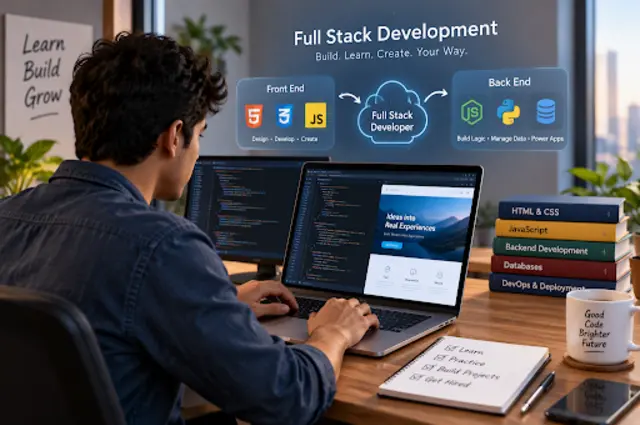
Full stack development covers the complete process of building a web application. It includes two main areas:
- Front end development: Designing and building the parts of a website that users see and interact with
- Back end development: Managing servers, databases, and the logic that makes a website work
- Databases: Storing, organizing, and retrieving information when needed
- Deployment: Making a website or application available for people to use online
A beginner who understands all these areas can see how a web application comes together from start to finish.
Providing a Clear Learning Path
Many beginners try to learn from scattered online videos and tutorials, and they often end up unsure about what to learn next. A structured course solves this problem.
A full stack web development course usually helps learners:
- Start with the basics before moving to advanced topics
- Follow a logical order of learning
- Avoid confusion caused by too many choices
- Stay consistent and focused on their goals
- Track their progress as they build new skills
This guidance is especially useful for people with no technical background.
Building Strong Technical Foundations
Strong fundamentals make it easier to grow as a developer. A good course introduces the core technologies used in web development and explains how they work together.
Beginners can develop skills in:
- Website structure and design: Creating clean and responsive web pages
- Programming logic: Writing code that solves problems and makes pages interactive
- Frameworks and libraries: Using popular tools that speed up development
- Server side programming: Building the logic that powers applications
- Database management: Working with data in an organized way
- Version control: Managing code changes and working with teams
These foundations prepare learners to handle real development work with confidence.
Learning Through Hands On Projects
Reading about code is helpful, but building something is where real learning happens. Most courses include practical projects that let learners apply what they have studied.
Working on projects helps beginners:
- Understand how different technologies connect
- Learn to find and fix errors in their code
- Gain confidence by seeing their work come to life
- Create a portfolio that shows their abilities to employers
A strong portfolio often matters as much as a certificate when applying for developer roles.
Developing Problem Solving Skills
Web development is not just about writing code. Developers spend a lot of time figuring out why something is not working and finding better ways to build features.
A full stack course encourages learners to:
- Break large problems into smaller tasks
- Think logically about how to reach a solution
- Research and learn independently
- Stay patient when facing difficult challenges
These skills are valuable in every technology role and help beginners grow steadily in their careers.
Opening Doors to Multiple Career Options
One of the biggest advantages of learning full stack development is flexibility. Since learners understand both front end and back end work, they can explore different career directions.
Possible roles include:
- Full stack developer
- Front end developer
- Back end developer
- Web application developer
- Software developer
- Freelance web developer
This variety allows beginners to choose a path that matches their interests and strengths as they gain experience.
Preparing for the Job Market
Many courses go beyond technical training and help learners prepare for their first job. This support can make the move into the industry much smoother.
Career preparation often includes:
- Guidance on building a strong resume
- Interview preparation and mock sessions
- Portfolio reviews and feedback
- Understanding industry expectations and workplace practices
- Exposure to tools commonly used by development teams
This preparation helps beginners present themselves confidently to employers.
Encouraging Continuous Learning
Technology keeps changing, and new tools and frameworks appear regularly. A good course teaches beginners how to keep learning on their own.
Once learners understand the core concepts, they can pick up new technologies more easily and stay relevant as the industry evolves.
Conclusion
Starting a career in web development can feel challenging, but the right guidance makes the journey much easier. A Full stack developer course gives beginners a structured learning path, strong technical foundations, practical project experience, and valuable problem solving skills.
It also opens doors to a wide range of career options and prepares learners for the expectations of the job market. For anyone who wants to build websites and applications from start to finish, choosing a full stack web development course can be a confident first step toward a rewarding career in technology.


 DevOps Strategies for Managing Infrastructure
 The Role of Custom Web Application Development in Digital Transformation
 Elevate Your Project: Outsource Ruby on Rails Development