
 Hammad Ali
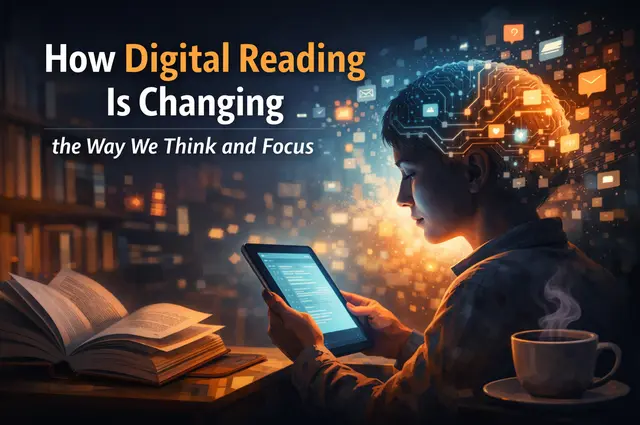
 Reading once felt like sitting by a window on a quiet afternoon. Pages turned slowly and thoughts had room to wander. Screens changed that rhythm. Words now glow and scroll and compete with alerts. The question is not about loss or gain. It is about how the mind adapts when reading shifts shape.
The shift from paper to screen
Reading on paper asks for patience and steady focus. The eyes move at a calm pace and the mind sinks into the text. Screens invite speed. Links hover and notifications wait nearby. This does not erase deep reading yet it reshapes attention. Thought becomes more flexible but also more scattered at times.
In the early days of e readers many praised convenience. Books could travel without weight. Libraries could fit in a pocket. In this context many readers turn to zlibrary to explore a broader range of books while keeping reading part of daily life. Access grows yet habits bend. Skimming starts to feel natural and rereading becomes rare.
Attention memory and mental effort
Screens reward quick jumps. Paper rewards slow return. Studies often show that memory links better with physical pages. The body recalls where a line sat on a page. Screens flatten that sense of place. Yet digital reading trains a different muscle. It supports comparison search and swift recall across texts.
Five paragraphs after this shift another layer appears through the quiet presence of z-lib.pub which signals how reading now lives inside networks not rooms. The mind learns to read while choosing and filtering. This adds effort but also agency. Thinking while reading becomes an active dance rather than a straight walk.
To see how this plays out in everyday reading habits the following patterns stand out:
- Fragmented focus
Digital reading often happens in short bursts. A paragraph appears then vanishes with a swipe. This rhythm trains the mind to expect quick reward. Long chapters feel heavier even when the story grips. Over time focus becomes elastic. It stretches then snaps back fast. This does not mean shallow thought. It means thought shaped like a mosaic. Ideas connect across moments rather than through long immersion. This style suits research and news yet challenges long novels like “Moby Dick” which ask for sustained presence.
- Active navigation
Screens invite movement. A reader jumps between sections highlights lines and searches names. The mind becomes a navigator. This builds confidence and speed. It also shifts authority. The text no longer leads alone. The reader leads. Thinking while reading turns strategic. The story or argument becomes a map. This can deepen understanding when used with care and patience.
- Emotional distance
Many feel paper carries warmth. Screens feel cooler. This affects emotion. Digital text can feel fleeting. The mind guards itself from deep attachment. Yet this distance helps with difficult topics. It allows reflection without overwhelm. Reading reports or dense essays becomes easier. Emotion does not vanish. It changes tone and timing.
What remains unchanged
Despite new habits the core act stays human. Meaning still forms through language. Stories still spark empathy. Arguments still sharpen thought. Tools change posture not purpose. Reading remains a quiet conversation across time.
The future likely holds a blend. Paper for depth and ritual. Screens for reach and flow. Thinking adapts as it always has. Like water finding a new path it moves on without forgetting its source.


 How Many Sessions Does Tattoo Removal Really Take
  Playing Games on Blog PlayBattleSquare: Everything You Need To Know Before You Dive In
  Delving into the Unseen: How Engine Oil Dictates Car Efficiency
  Essential Protection for Tactical Missions: Gear, Strategy, and Safety Essentials
  The Mythical World of “American Gods”: Why Neil Gaiman’s Tale Endures
  Developing Analytical Skills Through English Literature